
Hand-Painted Reproductions vs. Canvas Prints: What Buyers Should Know

You recognize the bridge, the water lilies, the sweep of a familiar sky. Then the listing offers a hand-painted reproduction, a canvas print, or a hand-embellished edition. The image may be similar, but each description should tell you something different about how the object was made.
For collectors, the useful starting point is the relationship between image, surface, and authorship. A reproduction can bring a composition into daily life, invite close study, and give a room a particular mood. Choosing well means understanding the materials and decisions behind the version you will actually receive.
Three ways an image becomes an object
A fully hand-painted reproduction is a new painting made by an artist after an existing work. Paint is applied to recreate the composition, with decisions about color, edges, brushwork, and texture. Ask whether the image is painted throughout or whether the process begins with a printed base. The listing should name the medium and support, such as oil on canvas, rather than relying on the word “handmade.”
A canvas print reproduces an image on a canvas support using a printing process. The visible brushstrokes in the source image may be reproduced as color and shading; that picture of a brushstroke is different from a newly applied stroke of paint. Canvas weave and a protective coating can also affect the surface. Ask for the printing method, ink type, canvas specification, and finishing details.
A hand-embellished print begins with a printed image and receives additional work by hand, which may include paint or a textured medium. Ask exactly what is added, where it appears, and whether every piece is treated individually. This hybrid approach deserves an accurate description so you can compare it fairly with a painting made entirely by hand.
This guide concerns reproductions of existing paintings. Artist-conceived prints, including etchings, lithographs, and screenprints, belong to their own collecting traditions and should be evaluated in that context.
Look at the whole image, then at the surface
Start with composition. The Met records Monet’s Bridge over a Pond of Water Lilies as a vertically oriented oil painting from 1899. A reproduction squeezed into a wide rectangle or cropped around the bridge changes the balance of pond, reflections, and greenery. Before comparing prices, check the proportions and ask whether the full image is preserved.
Next, compare the light and dark relationships. Do shadows still create depth? Do highlights lead your eye to the right places? A reproduction can contain plenty of detail and still lose the original composition’s structure through overbright color or flattened contrast.
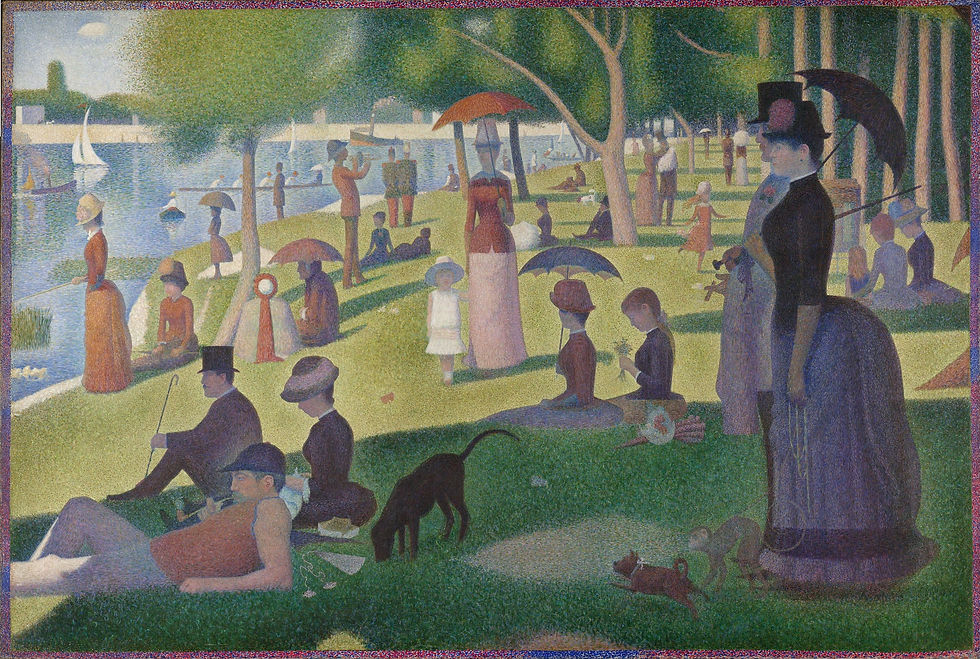
Then move close. Ask for straight-on photographs and a short video under light from the side, ideally showing the actual piece. Inspect the edges, surface, and back as well as the central image. Our Monet close-looking guide offers a way to separate structure, reflections, and surface; our article on Seurat’s La Grande Jatte explores how viewing distance changes what you see.
Let the description do more than the marketing
Terms such as “museum quality,” “giclée,” or “hand-finished” are a starting point for questions. Request specific materials and a clear production description. Thick texture alone does not establish that an image was painted throughout, and a beautiful mockup cannot show the condition of the object that will arrive.
For a hand-painted reproduction, ask who made it, when it was made, and how it will be labeled. A useful invoice might identify the maker or studio, medium, dimensions, and the historical work it follows. The original artist’s name should describe the source composition without implying that the newly made object came from that artist’s hand.
For a print, ask whether it is an open or limited edition, who controls the edition, and what any signature or certificate actually certifies. Keep the listing, invoice, production details, and correspondence together. These records help establish what you bought; they do not guarantee future resale value.
Check the rights behind the image
In the United States, copyright generally gives the rightsholder control over copying a protected artwork, subject to legal exceptions. The U.S. Copyright Office explains that public-domain works can be used without copyright permission. Whether a particular work qualifies requires more than recognizing a famous name: publication history and other factors can affect the term, as its copyright-duration guidance explains.
Ask a seller whether the image is public domain or used under an appropriate license. Also check the terms attached to the particular digital image being reproduced. Museum policies differ: The Met’s Open Access program, for example, makes designated public-domain images available under CC0. That policy is specific to eligible images; a museum name alone is not a license. Rights can vary by country, so sellers serving multiple markets should verify their intended use.
Compare the finished cost and practical details
Compare like with like: image size, outer frame size, stretched or rolled delivery, frame and hanging hardware, shipping charges, and applicable taxes or duties. Ask when a made-to-order work will be ready, whether you can review completion photographs, and what happens if it arrives damaged or differs materially from the agreed description. Read the return terms for custom work before ordering.
Plan the display location, too. The Canadian Conservation Institute advises protecting paintings from direct sunlight, heat, and extreme or fluctuating humidity. Follow care instructions appropriate to the actual materials, and avoid treating the painted or printed surface with household cleaners.
Choose the experience you want to live with
If individual brushwork is what draws you in, examine a fully hand-painted reproduction’s handling of paint. If your priority is a particular composition in a defined size, compare well-documented print options. With either, favor clear labeling, useful photographs, and specific answers over promises of prestige.
The lasting pleasure comes from knowing what you are looking at. Step back to take in the whole composition, move closer to inspect its making, and choose the version whose qualities you genuinely want to see every day.
Comments